
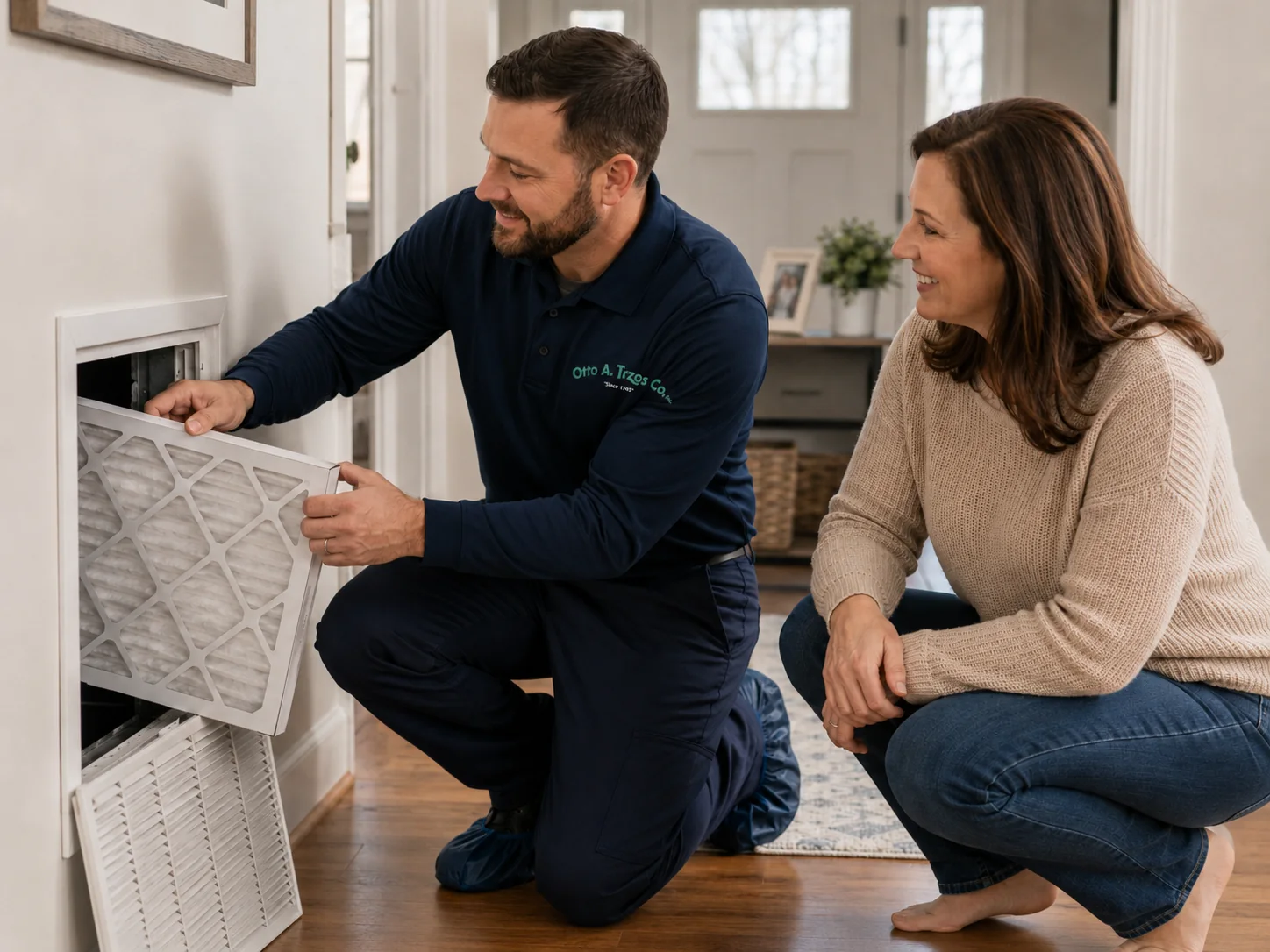
Better indoor air quality starts with identifying the problem. Filtration can reduce particles, humidity control can address overly dry or damp air, and ventilation or source control may be needed when the concern is odors, moisture or pollutants.
Better indoor air quality starts with identifying the problem. Filtration can reduce particles, humidity control can address overly dry or damp air, and ventilation or source control may be needed when the concern is odors, moisture or pollutants.
Start with the problem you are trying to solve
Dust, pet dander, smoke, odors, dry winter air and high summer humidity are different problems. No single device solves all of them. A homeowner concerned about particles may benefit most from better filtration, while condensation or musty conditions point toward moisture and ventilation questions.nnThe first step is therefore defining the complaint and looking at the home and HVAC system together.
Filtration has to work with the equipment
A higher-efficiency filter is useful only if the blower and duct system can move the required air through it. Installing a very restrictive filter without considering static pressure can reduce system airflow. Whole-home media cabinets can provide more filter surface area and longer service intervals in some installations.nnFilter selection should balance air-cleaning goals with system performance.
Humidity and airflow change how a home feels
Dry winter air can make occupants uncomfortable, while excessive summer humidity can make a correctly cooled home feel clammy. Poor return-air paths and closed-off rooms can also create comfort complaints that feel like air-quality problems.nnA complete approach can include filtration, humidification or dehumidification, equipment maintenance, airflow corrections and sensible source control inside the home.
Need help with your home comfort system?
Otto A. Trzos Co. / Heating Cooling Pros serves Metro Detroit homeowners with heating, cooling, boiler, water-heater and indoor-air-quality service.
Frequently asked questions
Questions homeowners ask about this topic
What MERV filter should I use?
Use a filter that meets your air-quality goals without creating excessive airflow restriction. Equipment and duct-system capability should guide the decision.
Do air cleaners remove odors?
Particle filters are designed primarily for airborne particles. Odor control may require different media, ventilation or addressing the source.
Can HVAC problems cause indoor air quality complaints?
Yes. Dirty equipment, poor drainage, inadequate filtration, humidity problems and airflow issues can all contribute to comfort or air-quality concerns.